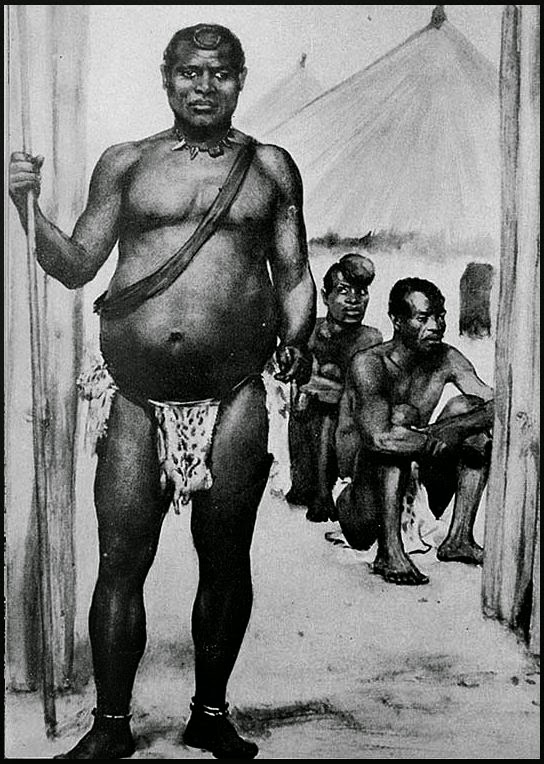
Sunday, October 4, 2020

Alone

 We are four

Nay, three going by tribal lore

Yet I am alone.

Misery has me but for a loan.


Tuesday, December 18, 2018

Eshu


A long time ago in the faraway land of Keei there existed a god called Eshu. Eshu was a mischievous god. He ate where he never sowed and reaped where he never planted. Eshu was a god who did not mind a little bloodshed as long as the blood watered the tree from where his fruit was picked. He thrived by convincing the people that their problems were his problems. But when the people faced hunger, diseases and poverty, Eshu and his kin lived in sumptuousness.
The people of Keei were famed for their farming. They would till endless tracts of land and plant cassava, millet, vegetables, fruit and rear countless animals. This is because the Keei people were descended from two great farmers, Inga the father from the mountains and Rewe the father from the lakes.
Inga and Rewe were children of the same father who was called Keei and who the land was named after. When Keei’s two sons had come of age and needed a place to settle, he allocated the mountains to Inga and all the descendants who would come after him while Rewe was  apportioned the lakeside to occupy and till with his descendants.
Despite this, the people of Keei always lived in peace and harmony with each other. To avoid conflict among themselves, they decided to have their two vast farms separated by a long wide road that ran from the north of the farm to the south. This notwithstanding, they would till their lands side by side, sing the same songs of their forebearers as they planted and share their porridge during breaks taken from weeding their two magnificent farms.
All this time, Eshu the god of mischief would watch them from his palatial home up in the sky. But when the time for harvest came, Eshu would immediately spring into action. Harvest time was Eshu’s most favorite period in his life for this was his time to reap where he did not sow.
As the people of Keei, the descendants of Rewe and Inga prepared their sickles and sacks in readiness to go and pick their harvest from the farmlands, Eshu would summon his wizard who would perform a rite on him. This rite would make Eshu acquire two colors. The right half of his body would turn into orange, the royal color of the Rewes while the left side would turn into red, the royal color of the Ingas. All Eshu needed to do after this was to wreck confusion among the people of Keei.
It therefore happened that during a harvest season, Eshu in his two colors would wait for the Ingas and Rewes two descend on their two farms and start harvesting. While at it, Eshu would appear in his two colors and walk from the north end of the road separating the two farms to the south end facing ahead and not mentioning a word. In those days, gods were revered beings and whenever he appeared, the people would lay prostrate in honor.
Once he had disappeared at the south end, the Rewes would ask their brothers the Ingas “Have you seen how magnificent Eshu was in his orange splendor, the royal color of Rewe?” The Ingas would then respond in objection, “That’s a lie! Eshu passed by in red, the color of our forefather Inga.”
And the Rewes would accuse the Ingas of calling them liars and the Ingas would accuse the Rewes of the same. The two would put aside their harvest and get embroiled in a bitter fight about who between them was right. Meanwhile, Eshu’s minions would gather from the abandoned harvest the best picks. After his servants had filled his sacks with most of harvest, Eshu would carry it back to his glorified home up in the sky, living the people of Keei with leftovers to gather.
And the people would not have enough to eat and no strength to fight any more. Meanwhile from his palace high up, Eshu would enjoy the sweat of the people’s labor, watching impishly as they went back to their farms to till, to plant and to weed. Eshu was a patient god, he would patiently wait for the next harvesting season.

Wednesday, January 21, 2015

The Man in the Mirror


Long long ago in the Balubanga Kingdom of the Abandu people of Western Kenya, there lived a Mighty King by the name Guyuguyu. Omwami Guyuguyu was famed in all of Abandu land for his ruthless bravery. He had led his army across all of Abandu land and those Chiefdoms that wouldn't co-operate with him were vanquished by his army but those that paid allegiance to him would be incorporated into his Kingdom. At seven feet tall, Guyuguyu was a hugely built and well chiseled warrior who would intimidate any opponent by his stature alone. He had been a great wrestler too and had floored every opponent he faced in the popular omunyikha wrestling matches.

It so happened that during a raid on the un-cooperating chiefdom of Abasonga, Omwami Guyuguyu’s son Ogungo was hit by a poisoned arrow sent by the enemy. Ogungo the King’s son died from this fatal strike. Omwami Guyuguyu mourned his son honourably and after the forty days of mourning were exhausted, he led his army blazing into the Abasonga chiefdom and when he was done, all the Abasonga females were slaves of the Balubanga and all the males were carcasses.

This raid to avenge his son’s death was so brutal that Omwami Guyuguyu’s name spread like wildfire. Musicians composed endless songs about the vanquishing of the Abasonga. The wind too, it carried the stench of the rotting Abasonga carcasses to the end of the earths. None of the surrounding Chiefdoms wanted to cross Omwami Guyuguyu’s path anymore.

Since Guyuguyu’s ferocity had spread fear all around, he did not need to do raids anymore. His reputation preceded him. All he needed to do was to send his messengers accompanied by a few warriors to any Chiefdom and they would return with whatever he wanted be it taxes, workers or volunteers for his now mammoth army. This made Omwami less and less active. He mostly spent his days feasting on Nyama Choma and traditional beer. 

There would be a feast in his palace every other day and the palace officials and visitors would be treated to sumptuous meals, flowing beer and subservient women from the conquered Chiefdoms. This lifestyle soon had a toll on Omwami Guyuguyu. His muscles became fatty, his height seemed to have diminished, his belly was overflowing, his cheeks became chubby and his once thunderous voice was now reduced to a shrieking whisper. 

Upon the advice of his eldest and most respected wife Ng'inabandu, Omwami Guyuguyu summoned Ogirinyo the revered wizard. He asked Ogirinyo to commune with the ancestors and find out why Omwami looked different in the mirror. After throwing his cowrie shells in the name of the gods, Ogirinyo advised the King thus:

‘Omwami Guyuguyu, your mirror and all the mirrors on our land have been bewitched by your enemies to make a false impression of how you look. Only the true mirror of our God Were Khagaba Rachar hidden in His cave atop the Namalo hills can give the true picture of how you look. You must journey up the Namalo hills to see your true self in Were’s mirror and order that all the mirrors on the land be covered and put away for they are bewitched. The gods also demand that before the journey is complete, no feast should be held in Bulubanga.’

So for the first time in months, Omwami Guyuguyu set foot out of the palace gates. On this first attempt, he could not walk beyond the walls of his village. That short distance left him panting and gasping for breath and he had to turn back and try again on the next day. Ogirinyo kept urging the King day after day and after some time, he was able to walk past the village walls to the fields beyond but whenever he felt like he could walk no more, he would turn and walk back to the Village.

Namalo hills are the sacred seat of the Abandu people and one had to walk for almost 25 kilometers to get to the sacred hills. The Abandu always made yearly sojourns to the hill to worship their God Were Khagaba Rachar. As days went by, the King gained more strength and resolve to reach the top of Namalo hills in order to look at his true self on Were’s mirror. Each day he walked further and faster towards the sacred hills and at times had to run all the way back home in case he couldn’t make it home on time.

One night Omwami summoned Ogirinyo to the palace and told him that he was sure he would reach the hills the next day. With excitement, the King told Ogirinyo how he had walked so far that he had seen the sacred splendour of the Namalo hills in the horizon. He asked Ogirinyo to set out with him the next day so that they could look at the King’s image in the gods’ mirror together. 

That night, Ogirinyo sent off two of his trusted helpers with a huge mirror to the Namalo hills and instructed them to place the mirror in one of the chambers of Were Khagaba Rachar’s caves.

On the next day, the King set out on his self-discovery journey with Ogirinyo in tow. Since he had been walking to and fro almost thrice every week, he had formed a habit of leaving very early so on this day they left at 4.00 am in the morning. As they walked along, Ogirinyo was impressed at the King’s speed. Omwami Guyuguyu even joked that with Ogirinyo’s slow pace they might get to the hills on the next day.

As Ogirinyo struggled to catch up with the agile King, he couldn’t help noticing how the King’s spring had come back. All the chubbiness had disappeared and the muscles were showing again. He had become lighter, leaner, tougher and faster. The sheer determination to reach the top of the hill had made him push himself out of his idling ways making him walk and walk days on end. And most importantly, it had stopped the daily feasts at the palace.

After walking for what seemed like an eternity, they finally arrived at the foot of the holy Namalo hills at 3 pm. The climb up the hill was even faster than the journey itself. Ogirinyo could feel the King’s urgency to look upon himself in the mirror of the gods. At long last they stood at the innermost chamber of Were Khagaba caves atop Namalo hills infront of God's true mirror. And for the first time in several months, the King looked at himself in a mirror. All the laziness and fatness was gone. King Guyuguyu the warrior was back and the true mirror of the gods had spoken.


©2015 Otiato Opali.

Thursday, January 16, 2014

A Woman Reborn.

Where she would worry about her physical state -
Her health, her looks and a reputation that’s great,
Now she tends to her soul’s health
And through prayer she seeks spiritual wealth.
She is a woman reborn.

She used to hate her mistakes
Seeking to live a life devoid of heartbreaks
Now she welcomes her shortcomings
As an opportunity to perfect her failings.
She is a woman reborn.

A strong woman does not show her fear
But a woman reborn shows courage when facing her fears
She doesn't face her difficulties by the bravery on her face
But by her belief in God’s grace.

She is a woman reborn
Journeying into a future unknown
Trusting not in the firmness of her stride
But in the presence of God by her side
For she doesn't seek strength to finish the journey
But through finishing the journey, she seeks to gain strength.

©2014 Otiato Opali.


(This is a commissioned poem. I was asked to write it, it didn't 'occur' to me as my poetry usually does.)


Monday, December 30, 2013

Rich people and large amounts


What makes one great? Is it the fact that their deeds are great or is it because people think their deeds are great? Social Media has become a tool with which we can lie, boast or dream of how perfect our imperfect life is.  

Mark 12: 41-42
. . . many rich people threw in large amounts. But a poor widow came and put in two very small copper coins, worth only a few cents.


Monday, December 2, 2013

The Poor Servant of God

He who seeks to keep his wealth shall lose it
But he who loses it for the sake of the Servant of God
Verily verily I say unto you
Shall save it.

Didn't our Lord wash his disciples feet
And teach that the master should wash the Servant?
So who am I,
Humble Servant of our Lord -
Who am I,
Your dedicated Servant -
To say nay when you come forth to wash my feet?

For if foxes have dens
And birds have nests
But the Servant of God has no place to lay his head
How in God’s name shall the gospel be spread?

I am but a poor Servant of God
And if you want to be complete
Go and sell all your possessions
And give it to the poor,
The poor servant of God.
And Thou shall have treasure in heaven.


©2013 Otiato Opali

Tuesday, November 19, 2013

The women in my life.

There was Omuya my grandmother
Up in the ranks with Ogungo my mother.

And two sisters
Two Naluvangas
Each as sweet as the other.

Then came my wife – Ng’ina Omuya
Her people call her Omoiseke Omuya.
She who is my grandmother’s mother
She who brought back Omuya - 
My father’s mother.

I now boast of a new Omuya
The return of my grandmother
Who will make me a grandfather
And my wife a grandmother.

Among her sons, dear ancestors
May she have plenty of daughters
And make the women in my life flow
As abundantly as ancient waters.


©2013 Otiato Opali

Thursday, October 10, 2013

Richard Gizbert continuing

To understand the meaning of the title 'Richard Gizbert' and its significance to this post, you might want to look at the two posts preceding this one; Richard Gizbert updated & Richard Gizbert  

Richard Gizbert posts are about a spot I call the Listening Post. A spot that has been so dear to me in the concrete jungle that is Nairobi. A spot that was a vast field of nothingness when I chanced upon it. I have been tracking its disappearance as developers, notably GreenSpan Investments put up multi-million malls and apartments in 'my' space.

I was there recently and found them putting up what appeared to be a store* in the remaining space where I had been boxed into. A store from where the rest of the Listening Post will be taken away from me. A store from where the building of structures in the remaining area of 'my' space will be managed.

All I (a squatter) can do is document.


The Listening Post as I knew it in 2008 when it was all 'mine'


The Listening Post in 2011 as Greenspan developments started showing

The Listening Post in 2013
2013. This small house in the foreground is the Store* mentioned in this post, its position is marked by a red star in the 3rd picture above. I know it will be a matter of time before all the space left is gone. With God's blessing, I will be around to capture the fall of the remainder of my Chill Spot


Wednesday, September 25, 2013

Al-Sha-Cowards


That since the KDF stormed your den
And brought down your illegal reign
You slay our helpless children
And kill our defenseless women.

A coward by whatever name
Will never win any game
And just like this ploy was brought to tame
We shall bring your cowardice to shame

©2013 Otiato Opali 


May the souls of the innocent Kenyans killed in the September 21st '13 terror attack at the Westgate Mall rest in peace

Tuesday, June 18, 2013

Not that anything but that everything.

Not that I don’t love you
          I had never known love till I met you.

Not that you don’t got the fire
          You satisfy my deepest desire.

Not that I need a break
          You are every breath that I take.

Not that anything
          I love you more than everything.

But that I need a younger girl
          Not an older pal.

I need a young shy smile
          Not your rocking motherly laugh.

I need someone to protect in my arms
          Not someone in whose arms to be protected.

An old patch
Will never mend a new wine-skin.

©2013 Otiato Opali

Thursday, February 14, 2013

Prodigal Daughter

As the journey trickled down towards its end
Obuolo came to the Kajulu hills
And from the top of an aged boulder
He squinted at the sparkling city below.

Kisumu the city clung to the lake
Like debris washed ashore.
The window glasses and iron sheet roofs reflected the sun
Shining like sparkling splinters of broken glass
On a barefooted child’s path.

He would isolate her from the splinters
He would redeem her from this plastic existence
Where she peddles plastic love
Across plastic counters.

He would fish her out of the debris
Wash off her filth in the mighty lake
And carry her back to his home,
Her home.

From the top of the aged boulder
Atop the ageless Kajulu hills
Obuolo mopped his sweating brow
And set out for the city below.

©2013 Otiato Opali

Sunday, February 3, 2013

Someone Take Me To Zimbabwe

Somebody take me to Zimbabwe
Down to the famed Matobo National Park
And up the Malindidzimu hill
I have unfinished business with two gentlemen resting there.

I don’t want to see the lions and giraffes -
We have plenty of those in Kenya.
Nor to marvel at how worthless the Zimbabwean Dollar is -
Is only machine-a-make money.

I want to stand atop two homosexuals’ graves
One Cecil Rhodes and his lover Starr Jameson.
I want to unzip my trouser and unsheathe my big African cork
I want to splash my urine on this century old tomb!

©2013 Otiato Opali.

Monday, February 6, 2012

Be careful what you wish for

A journey of a thousand miles
Must not be started in a sprint.
So when at the onset of the flight
She doubted his ability to lift her to those heights
She had judged too soon.

For she had declared she wanted to fly all night
Only to realize that that was too long a flight
And her scoffs at his lack of muscle
Turned into gasps of praise
As she lost her breath halfway through the night.

©2012 Otiato Opali

Wednesday, February 1, 2012

Credo Kama Sigara


Two young men lie under a tree smoking. It is their ‘lunch break’. Since they have no money for lunch, they share a smoke instead. They are lucky to be employed though, this new government started an initiative called 'Kazi kwa Vijana' where young men are given slashers, jembes, spades and wheelbarrows to do menial work for three hundred shillings a day. 

With three hundred shillings a day, you not only skip lunch, you don’t have breakfast either. This is if you are to feed the children back at home, pay the rent at the end of the month and survive in this city. A phone rings and before the shorter one among them answers the call it goes silent.

‘Nani huyo anakuflash, hajui kuna bamba ngovo siku hizi jo,’ the tall one with the cigarette, which is almost halfway smoked, taunts the shorter brother with the phone.

The shorter one looks at his phone and his face is undecided on whether to frown or be concerned.

‘Ni matha bana’ he says, ‘alikuwa anadai ganji fulani nabado sina any. But itabidi nimpigie.’

‘Wewe ulitupa mbao’ the one with the cigarette says between puffs, ‘Kazi kwa vijana si kazi, mbona uliwaambia umepata job? Saa hii wanadhani umeshika mkwanja noma. Mimi home wanajua bado niko jobless so hakuna msee ananiitisha ganji.’

‘Wee unanimalizia fegi!’ the short one says as he yanks the cigarette from his friend’s fingers. After a long drawn puff, he turns to the friend, ‘Nisaidie na ashu niget bamba. Matha anaeza kuwa na emergency.’

‘Acha zako bana. Buy ata credo ya finje jo, ashu hauwezi ata sema hallo ukamaliza’ the tall one says laughing

'Acha nikushow' the short one retorts 'credo ni kama sigara. Ukinunua packet utavuta mob bila mpango. Ukinunua credo mob utapigia wasee bila design. So vile mimi hu-buy sigara moja moja ndio nisivute mob ndio vile pia mimi hu-buy credo ya ngovo ngovo ndio Safaricom wasimange ganji yangu. Ni kubaya jo!’

‘Yenyewe kama imefika hapo, ni kubaya!’

Tuesday, January 10, 2012

Even after death

Has a thorn
A hard stubborn thorn ever torn
Torn through your flesh to the bone
And after causing your death
After leaving you with no breath
Refuse to come out, even after your death!


Surprised?
Or you don’t know you are dead
Don’t worry,
Locate your thorn instead.


For I was sick in bed
But I didn’t know I was dead
Until they buried me - 
With a thorn through my heart!

©2012 Otiato Opali

Tuesday, December 20, 2011

Life’s little things.

The great things this life does hold
Don’t make our lives bold
Not even gold –
It’s the little things

It’s a tiny flower
A baby’s smile that never turns sour
A little word sincerely spoken
Can lift your spirit high
Like a feather in the sky.

It’s that little dew drop in the morning grass
The warmth in the sunshine
And the splendor in the moonlight.

Money can quench not
Desires that burn us hot
The remedies are all around us
They are all a parcel of God’s creation
And all are free
Free as wind –
Free little things.

©2011 Otiato Opali

Thursday, December 1, 2011

Not With My Eyes Closed

Bought a ¼ Kg of sugar at the kiosk for 50 shillings
Normally I would pay 50 shillings for ½ Kg
To last me every two weeks
But am not giving them my 100 shillings for ½ a Kg
Not with my eyes closed.

It makes no difference, really
I will still have to buy another ¼ Kg in a week
And still spend 100 shillings for ½ Kg.
They will take the extra 50
But not with my eyes closed.

Because it's closed eyes that dont see the whole world in debt
With the missing money in a few silk lined pockets
Yet governments scoop more of our hard worked sweat
To pay for the missing money they have hidden in plain sight.

I will therefore pay 50 shillings twice as they take their 100
I will not pay 100 shillings where I used to pay 50
If someone has to rob me
They better do it staring in my eye
Because am not letting anyone rob me
Not with my eyes closed.


©2011 Otiato Opali

Tuesday, November 22, 2011

Lord Ouma!

Have you ever met a man so great that you cant describe him in words? I have not just met such a man, I have known him for quite a while now. Lord Ouma is one of those characters that can only be described as phenomenal.

Lord Ouma comes from Busia like I do but I knew him because of his son, my best buddy so far and a former schoolmate.

I was therefore enthralled to stumble upon a witty article by one Biko Zulu (who I find to be the best blogger in Kenya yet) on Lord himself. Biko was talking about what a car can tell you about its owner in his article Cars; their stories and thank God he spotted Lord Ouma's KPP. What followed was the most candid rendition I've ever seen or heard about Lord Ouma. I've annexed the section about Lord and shared it below with permission from Biko.

Have a good look at this man’s face. Look at his eyes. What do you see in them? The answer is nothing. Now forget about all that wind about telling a man’s character by looking into his eyes. You can’t, at least not entirely. But this man’s face is a storyboard and it has that lopsided character weighted from cynicism. This is how a cynic’s face looks like. This is the face of a man who questions things. A curious man. This look here says, “Oh, is that right, son?” This look here is a look of a man who has lived his life believing that not everything is what it seems.


Look at his hat. I like his hat, perched atop his head like an afterthought. But you can tell it was intentional, this hat. You can tell from his hat that he still seeks swag. This hat might not be trendy, but it’s his hat and he never leaves his house without it.


This man was a cop for 35 years, most of which he worked for the Interpol’s anti- narcotics wing. The Narcs, as they call themselves. Who could have guessed?


His name is Mzee Ouma. He is in his 70’s. He is retired, over ten years in retirement. He spends his day sitting in his bar, drinking what he calls “Coffee spirit.” I found his car before I found him and his car led me to him. His car is a 1970 Fiat. Old as the hills. I asked a couple of boys next to it who owed it and they told me to find him in the bar. And I did.


When I walk in, he is seated in his darkened bar. His socked feet are stretched on top of the table, next to his drink. He regards me coldly as I shuffle in and introduce myself. He offers me a rumbled handshake, a weathered handshake, the handshake of an old man. I tell him I love his car and I would like to ask him a few questions regarding it. He motions me to an empty chair.


He takes his time before he talks, as if he is stringing the sentences and editing it in his head before he utters them. It’s old age maybe. He asks me what I do. I tell him I’m a scribe.


“Can I see some ID?”


I hand him my press card. He gingerly removes his reading glasses from its case and pores over my Press card, then he does something odd. He asks the lady at the counter to bring the day’s newspaper. “Now show me which article you have written today.”


I tell him I don’t write on the Friday paper, that I write mostly on Saturdays and occasionally on the sister paper. He absorbs this for a while before asking if I’m writing about his car for the newspaper.


“No,” I say, “It’s for my blog.”


“What is that?”


“It’s like a diary.”


“Only women write diaries!”


Some moron seated two chairs away chuckles heartily at that. He finds that really funny, the funniest thing he has heard in a while. I want to ping a beer glass off his skull.


“It’s not like a diary, diary,” I stammer, “It’s like something you write on the internet.”


He grunts. I’m hoping that’s not a sign that he’s about to fall asleep; you know how old people are, if you bore them they will sleep.


“Who reads this, this, thing?”


“Blog.”


“Yes. Who reads it?”


You know that’s a question I have been asking myself lately. Who reads this blog? Truth is I don’t know. I know their pseudonyms, but that helps as much as broken clock.


“That’s a good question.” I say reflectively to which he stares, no scowls, down at me obviously expecting an answer.


“Well, the people who read blogs are faceless.”


One of his eyebrows arches up.


“I mean to say, it’s hard to say exactly who reads, but I want to think they are like me.”


“Like you?” he asks.


“Normal.”


He cracks the first reluctant smile.


“Do you make money of this, this…thing?”


“Blog.”


“Yes, blog.”


“No, at least not yet.”


“So why do you do it?” This question is punctuated by a look that implies that I’m sort of stupid.


“Probably the same reason why you sit in this bar daily drinking your coffee spirit.”


He stares at me, an intimidating look that says “Oh, we have a smartass in town gentlemen.”


Anyway, he talks about his car. He bought it for Ksh 17,000n at F. Boyare Kenya Ltd.


“Is it still there?” he asks.


“Yes, it’s outside.”


“I mean F. Boyare Ltd, not my car.”


He says F. Boyare is a motor store at the junction of Harambee Avenue and Parliament Road. Maybe it was, in 1975, not now I tell him. He says he has kept the car for this long because it’s “durable,”. He adds that its spares are authentic, not the knock offs that are sold now. He scorns at automatic cars, calls them “Lazy.” He loves the stick shift because it’s a good form of exercise. He takes me outside and he proudly pops open the bonnet and shows off the engine. He starts the car and revs it, and then while the engine idles he steps out and stares at his car with a pride that is fun to observe.


Back in his bar, he opens this old but cool leather case which contains certificates and land title deeds and all these important papers and there he shows me the receipt he bought the car with. He also shows me the receipt for the first car he ever bought, a Datsun in 1963. As expected with old people conversation drifts to his time at the police force, his long travels in America and Europe. He shows me a medal he earned at Interpol. He talks about the Russia’s KGB, the America’s FBI and the Scotland Yard. He tells me he can tell a druggie a mile away. He can tell the quality of cocaine by tasting it.


“Have you ever shot and killed anyone?” I ask.


He ignores that question like I never asked it. He talks about his son instead, the one who “just died.” I say I’m sorry to hear that and he waves it away dismissively. He talks about another son who went to Makerere University to study but came back without graduating. “Drunk too much in Wandegye, yes?” I say with a chuckle. He talks about his kids who “have disappeared in America.”


“How many children do you have?” I ask.


“Several.” Comes the curt answer. Several could be 50 kids you know, but I don’t want to pursue that.


“Do you fear dying?” I ask.


“Why?” he asks preposterously, a question that acts as my answer.

He has lived his life well, he says. He loves his twilight years. When he talks about his children he harbors little bitterness. He loves to sit in his bar and drink his coffee spirit or whatever. When I ask him what he regrets most about his life, he thinks for a moment and replies, rather dishonestly, “nothing.”


“Not one thing you wish you did differently?” I insist


“I’m happy with my life.”


So I ask him what quality one needs to live a successful life. The maxims of life that can help us navigate life successfully.


“Honest and integrity,” he says, “Be satisfied with what you have. Don’t aspire for riches; make enough to offer decent education for your children, to buy a decent house to live well. Wealth kills; it will bring disease and grief into your life. Greed for money will be what finally kills young people.”


I realized that throughout our talk he never did once mention God. Not to imply that he wasn’t spiritual, but I would imagine that a man in his twilight years would by default throw in God in his conversation. Or maybe he was being respectful not to call the good lord’s name in a bar.

Tuesday, November 1, 2011

Dear Sun

Birds salute dawn with lonely tunes
No one to listen with me.
The sun yawns orange gloom
No one to grieve with me.

Dear sun,
While on the other side of the world
Tell me, have you seen her?

My forlorn shadow dwarfens under my feet
No one to redeem me.
Half way across the sky
The sun blends my tears with sweat
No one cries with me.

Dear sun,
Having searched half the earth
Tell me, have you seen her?

Couples, in gold lit faces, gasp at sunset
No one to gasp with me.
The sun’s golden rays seal their whispered vows
No one to whisper with me.

Dear sun,
Now that you retire
Will you ever see her?

©2011 Otiato Opali
'Live until you die!'

About Me

My photo
Though I might look like your common guy next door, there's more to me than meets the I. If you get the chance to meet the I, you will find out more about me.